
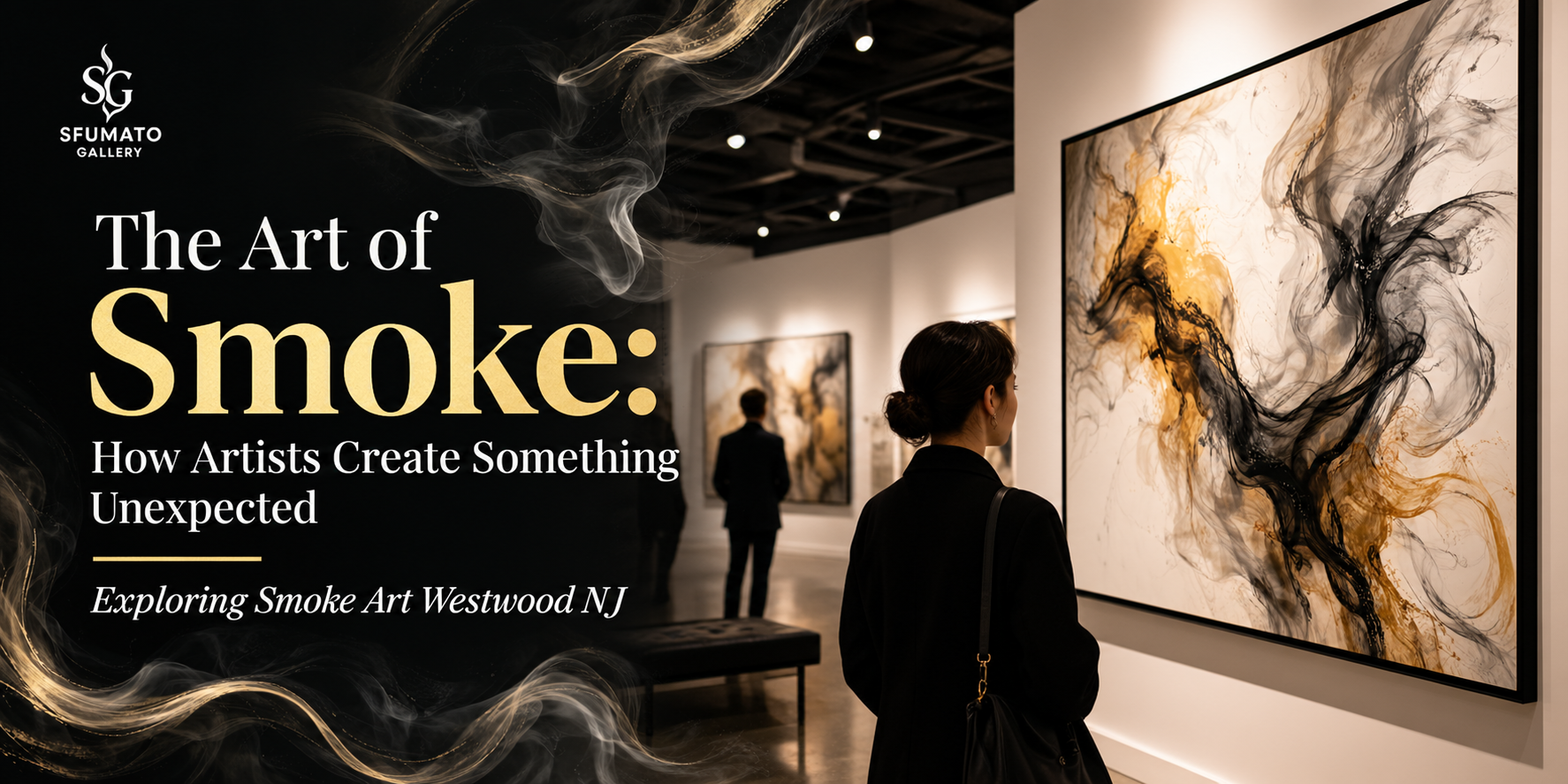
How can smoke become art? At first glance, smoke seems like the opposite of control – drifting, fading, impossible to hold. Yet in the hands of a trained artist, smoke can leave behind textures, tonal shifts, and organic patterns that no brushstroke could fully replicate. For anyone curious about smoke art in Westwood NJ has become a place where this unconventional medium is worth a closer look, whether you’re an art lover, a first-time buyer, or simply curious how the process works.
What Is Smoke Art and How Is It Created?
Smoke art is artwork created using smoke, soot, heat, or controlled combustion as part of the creative process, rather than relying solely on paint or ink. The artist works with the residue and marks smoke leaves behind, shaping them into a deliberate composition.
Unlike traditional painting, where the artist applies pigment directly, smoke art often begins with a reaction: heat meets a surface, and the resulting soot or char becomes raw material. The artist then studies the marks, decides which to keep, which to soften, and which to build upon. This back-and-forth between chance and intention is part of what defines Modern Smoke Paintings as a category of contemporary art.
The general artistic stages typically include:
- Preparing a surface suited to smoke, soot, or heat-based marks
- Creating controlled exposure under close supervision
- Observing the natural patterns that emerge
- Reinforcing, blending, or removing sections to build a composition
- Sealing or protecting the finished piece
Because every surface reacts slightly differently, no two pieces of artwork created with smoke turn out exactly the same.
How Do Artists Turn Smoke Into Something Unexpected?
Artists turn smoke into intentional artwork by treating unpredictability as a creative tool rather than an obstacle to eliminate. Instead of forcing an exact outcome, they guide the process and respond to what the smoke produces.
This generally involves a sequence of artistic decisions:
- Selecting a surface that will hold marks well
- Planning a rough composition or concept in advance
- Creating controlled smoke effects in a safe, deliberate manner
- Observing how patterns, gradients, and textures form naturally
- Developing shapes and contrast from those organic marks
- Refining the piece by adding detail or softening areas
- Preserving the finished work so the marks remain stable
Because smoke behaves differently depending on humidity, airflow, and surface material, artists rarely try to force identical results twice. This is part of why smoke artwork is often described as one-of-a-kind rather than reproducible.
What Makes Smoke Artwork Different From Traditional Painting?
Smoke artwork differs from traditional painting mainly in how the marks are formed – through reaction and residue rather than direct application of pigment. This creates a distinct visual language.
Compared to conventional painting, smoke-based pieces tend to offer:
- Softer, more organic gradients instead of sharp brush edges
- Deep, atmospheric tones rather than a full color palette
- Natural, unrepeatable texture from the combustion process
- A layered sense of depth created by varying soot density
- Visual unpredictability that traditional painting rarely produces
Neither approach is inherently superior – they simply produce different artistic outcomes. Someone drawn to precise detail may prefer traditional painting, while someone drawn to atmosphere and texture may find smoke-based artwork more compelling.
Why Do People Choose Smoke-Based Artwork?
People are often drawn to smoke-based artwork because of its distinctive texture, moody tonal range, and one-of-a-kind character. Few art forms rely so directly on an uncontrollable material to shape the final image.
Common reasons collectors and homeowners are interested include:
- The organic, almost photographic quality of smoke-based patterns
- Dark, atmospheric tones that suit modern interiors
- A sense of individuality, since no two pieces are identical
- A contemporary aesthetic that stands apart from conventional wall art
- Its conversation-starting quality in a home or office setting
For those seeking a striking centerpiece rather than a standard decorative print, Luxury Smoke Art can offer a bolder visual statement, though value and desirability ultimately depend on personal taste rather than any guaranteed investment outcome.
How Should Smoke Artwork Be Displayed and Cared For?
Smoke artwork should generally be framed, protected from direct sunlight, and kept in a stable environment to help preserve its appearance over time. Because the surface often relies on delicate soot or char marks, handling matters more than with conventional paintings.
Helpful care considerations include:
- Using UV-protective glass or framing when possible
- Avoiding prolonged direct sunlight, which can affect tone over time
- Keeping the piece away from high humidity or damp areas
- Dusting gently rather than using liquid cleaners
- Handling the piece by its frame, not the artwork surface
- Consulting a professional conservator for deeper cleaning or repair
Because materials, finishes, and framing vary from piece to piece, care needs can differ significantly between individual works of art.
Is Smoke Art Suitable for Homes, Offices, and Collections?
Smoke art can suit a wide range of spaces, from private homes to professional and hospitality settings, depending on the tone and scale of the piece. Its atmospheric quality often works well as a statement piece rather than a background accent.
This style of artwork may appeal to:
- Homeowners looking for a distinctive focal point
- Interior designers seeking texture-driven wall art
- Collectors interested in experimental or process-based art
- Businesses and hospitality spaces wanting a memorable visual element
- Buyers who prefer atmospheric tones over bright color palettes
For those specifically drawn to gallery-quality pieces, Fine Art Smoke Paintings are typically evaluated the same way as other fine art – based on composition, technique, and how well the piece fits the intended space.
Why Choose Sfumato Gallery in Westwood?
Sfumato Gallery offers visitors in and around Westwood, NJ, the chance to see smoke-based artwork in person, where texture, tone, and depth are easier to appreciate than in photographs alone. Viewing artwork directly is often the best way to understand how light interacts with soot-based surfaces.
For anyone exploring the local art scene, visiting a gallery in person allows for a closer look at technique, scale, and finish before making a decision. It also offers an opportunity to ask questions directly about a piece’s process, materials, or presentation.
Frequently Asked Questions
What is smoke art?
Smoke art is artwork created using smoke, soot, or controlled heat as part of the creative process. Artists shape the resulting marks and tones into an intentional composition rather than relying only on traditional paint.
How is smoke artwork created?
Smoke artwork is typically created by exposing a surface to controlled smoke or heat, then refining the resulting marks into a finished composition. The process combines careful technique with the artist’s response to natural, unpredictable patterns.
How much does smoke artwork cost?
Pricing for smoke-based artwork varies based on factors like size, materials, complexity, and the artist’s time and skill involved. Framing choices and the uniqueness of a piece can also influence overall cost.
Where can I find smoke art near me?
Searching for smoke art near me often leads to galleries and independent artists who specialize in experimental or texture-based mediums. Visiting in person is generally the best way to evaluate a piece’s quality and craftsmanship.
What should I look for when buying Smoke Art Westwood NJ?
When considering Smoke Art Westwood NJ, look closely at texture, tonal depth, composition, and how the piece is framed or protected. It also helps to ask about the materials and process used to create the specific work you’re interested in.
Final Thoughts
Smoke art demonstrates how an unpredictable material can become part of an intentional artistic process, resulting in artwork with distinctive textures, tones, and visual character. Whether you’re new to the medium or already drawn to its atmospheric appeal, exploring smoke art Westwood NJ offers a chance to see this technique up close. Consider visiting Sfumato Gallery to view available pieces in person and see how smoke, tone, and texture come together as fine art.