
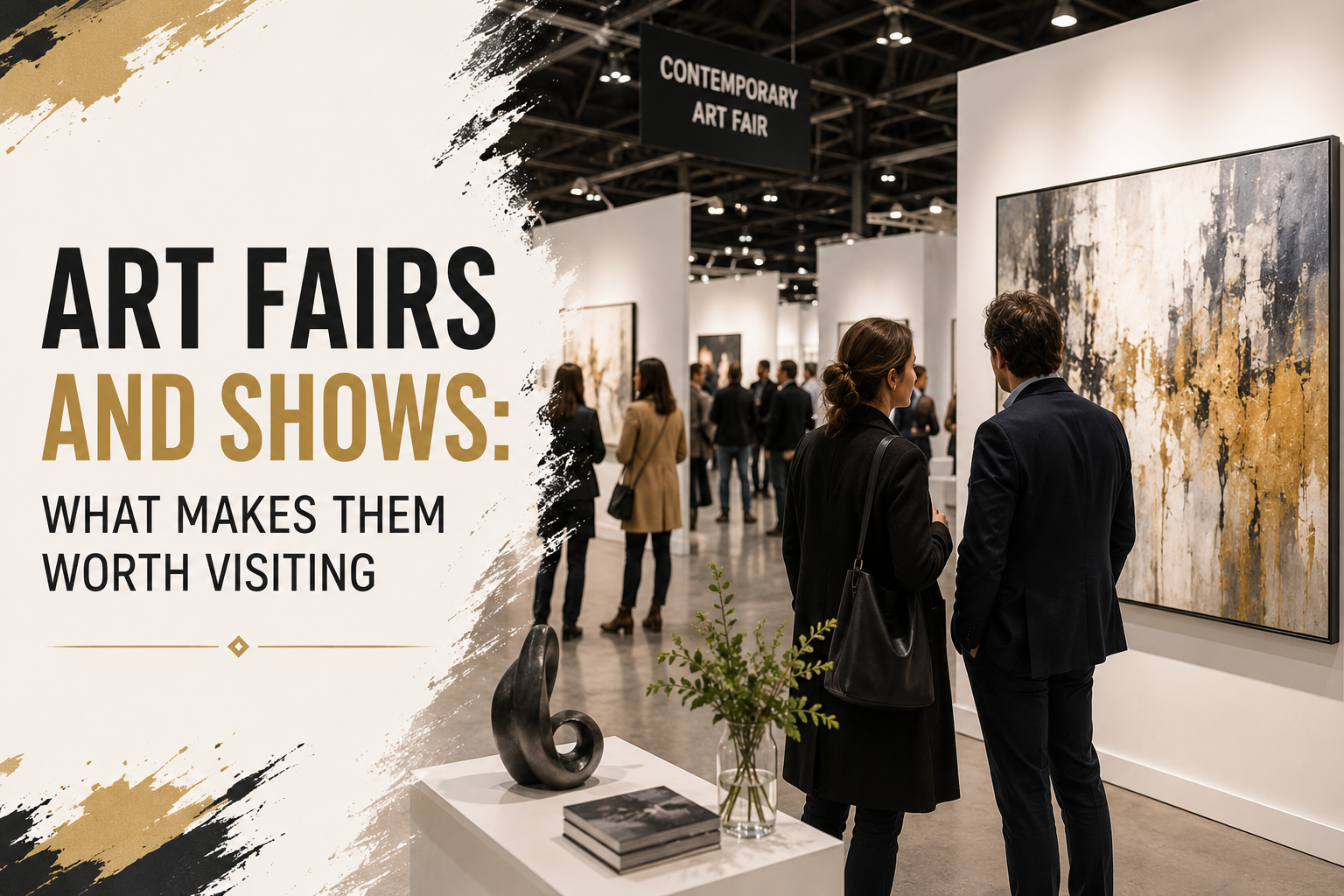
Walk into any conversation about the art world and you’ll hear the terms thrown around almost interchangeably: a “fair” here, a “show” there. But if you’ve ever attended both, you already know they’re not quite the same experience. Understanding the difference isn’t just trivial for collectors; it actually changes how you plan your visit, what you should expect to see, and how much time you’ll want to set aside.
At Sfumato Gallery, we spend a lot of time thinking about how people experience art outside the traditional white-cube gallery setting and few formats do more to shape that experience than fairs and shows.
What Actually Happens at Art Fairs and Shows
An art fair is typically a large, multi-day event where numerous galleries and independent artists set up booths side by side, often inside a convention center or a sprawling temporary venue. Think of it as a marketplace of artistic voices; you might walk past a photography series in one booth and a bold abstract painter in the very next. It’s fast-paced, visually overwhelming in the best way, and ideal for anyone who wants to sample a huge range of styles in a single afternoon.
A show, on the other hand, tends to be smaller and more focused. It usually centers on one gallery, one artist, or one curated theme, giving visitors room to slow down and actually sit with the work rather than rushing between booths. Both formats matter, and both serve very different purposes depending on what kind of experience you’re looking for.
Why People Are Paying More Attention to Local Art Fairs and Shows
There’s a noticeable shift happening. For years, the assumption was that meaningful art experiences only existed in major cities New York, Miami, Los Angeles. But smaller regional galleries have started producing exhibitions with the same level of curatorial thought, minus the crowds, the ticket lines, and the exhausting logistics of a major metro fair.
This shift matters because it lowers the barrier to entry. You don’t need to plan a trip or take a day off work to see thoughtful, well-curated contemporary art. Local galleries hosting their own shows have made the experience far more accessible, without diluting the quality of the work on display.
What to Look for When Choosing Which Events to Attend
Not every listing labeled as an “art event” delivers the same value, so it helps to know what separates a memorable visit from a forgettable one. A well-run show usually has a clear curatorial thread tying the pieces together so you can tell the selections weren’t random. The space itself matters too; good lighting and thoughtful layout make a real difference in how work is perceived. And ideally, there’s some opportunity to engage, whether that’s gallery staff who know the artists’ stories or an opening reception where you can ask questions directly.
This is the standard Sfumato Gallery holds itself to with every exhibition it presents work that’s chosen with intention, displayed with care, and open for genuine conversation rather than passive viewing.
Making the Most of Your Next Visit
If you’re new to attending these kinds of events, a few small habits go a long way. Giving yourself more time than you think you’ll need rushing through any exhibit means missing the details that make a piece worth seeing. Don’t hesitate to ask questions; gallery staff are almost always glad to talk about the artist’s process or the story behind a particular piece. And keep a running list of galleries or spaces you enjoyed, since many rotate their exhibitions regularly, meaning a return visit rarely looks the same twice.
Sfumato Gallery follows this same rotating model, with new exhibitions moving through the space throughout the year so there’s always something fresh to experience, even for repeat visitors.
Why This Matters for Collectors and Casual Visitors Alike
Whether you’re actively building a collection or simply enjoy spending an afternoon surrounded by thoughtful work, both fairs and shows offer real value. Fairs give you breadth, a fast, energizing survey of what’s happening across dozens of galleries and artists at once. Shows give you depth the chance to really understand a single artist’s vision or a gallery’s curatorial voice.
Sfumato Gallery leans into the latter, curating exhibitions that reward a slower, more attentive kind of looking. It’s a philosophy rooted in the gallery’s name itself, the Renaissance technique of blurring boundaries, where meaning reveals itself gradually rather than all at once.
Final Thoughts: Finding Value in Every Art Fair and Show
Art fairs and shows offer more than just a chance to view beautiful artwork—they create opportunities to discover new artists, explore different creative styles, and connect with the stories behind each piece. Whether you enjoy the energy of a large art fair or prefer the focused experience of a curated gallery show, each format offers a unique way to engage with contemporary art.
At Sfumato Gallery, we believe meaningful art experiences come from taking time to look closely, ask questions, and build connections with the work and the people behind it. Local exhibitions and art events make it easier for both collectors and newcomers to experience creativity in a welcoming environment.
The next time you attend an art fair or show, go beyond simply viewing the artwork—take the opportunity to learn, explore, and experience the deeper connection that makes art truly memorable.
Frequently Asked Questions
What’s the main difference between an art fair and an art show?
Fairs feature many galleries and artists together, while shows usually focus on a single artist or theme.
Do I need to be a collector to attend?
No, both fairs and shows are open to anyone with an interest in contemporary art.
How long do most gallery shows run?
Typically several weeks, giving visitors flexibility to plan their visit.
Is it common to purchase art directly at these events?
Yes, most exhibited pieces are available for purchase on-site or through the gallery.
Are smaller, local exhibitions worth attending compared to major fairs?
Absolutely smaller shows often offer a more focused and personal viewing experience.
Can I talk to gallery staff about the artwork on display?
Yes, staff are usually happy to share background on the artists and their work.